Stepping Back

I spent the last week with my family in a Girl Scout camp in central Maine. There was rain and mosquitoes, laughter and tears, warmth and comforts only found with the people one can count on not to judge too harshly, because they know, my silence and my inability to explain well the deep and constant weight of emptiness depression creates.

I found myself alone in a canoe Friday morning with my little dog, tears streaming down my face because the grey stillness of early morning Maine perfections – the calm water, the unbearable green treeline, the unearthly, pure air breathed into my lungs – did not bring me joy. Or more to the point, joy was there, but I could not experience the emotion which I have had in abundance so many time before because I am still here behind this wall. I see, I smell, I taste the same things I have hundreds of times, but just now, they are out of reach.

It isn’t easy to articulate this gulf. It isn’t pleasant to stand at this place and to know there are things to feel just beyond my grasp. However, the knowledge that I can remember feeling joy and awe, while causing discomfort, also moves me to want the path back to be again within reach.

I held my infant nephew many times this past week and was comforted by his simple love. His responses to smiling faces, to sweet voices, gentle touch, inspire me to take the small steps back to finding a place where simplicity can begin to bridge the void.

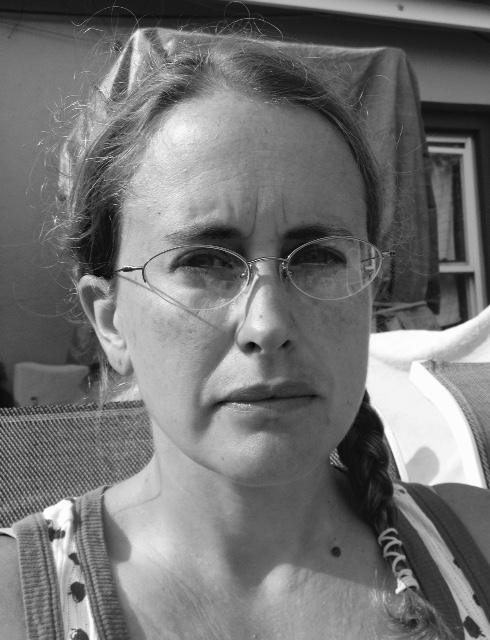
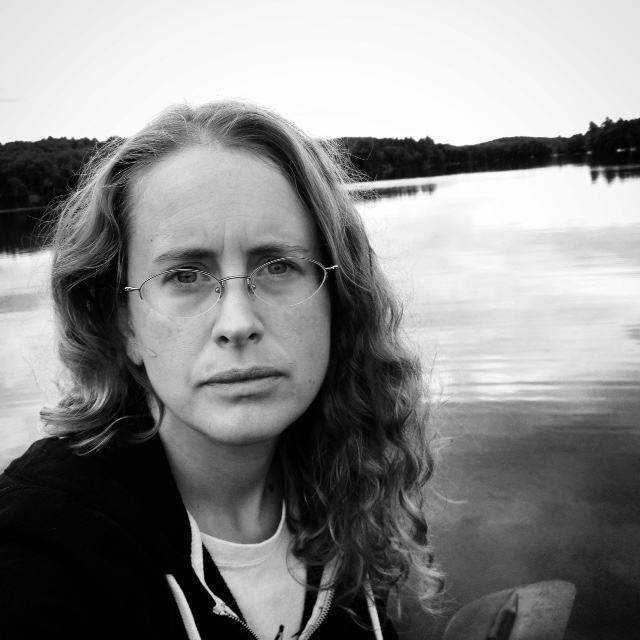
This is me on Friday:

FullSizeRender(1)

Gratitude

This afternoon I will drive to Maine with my family to spend the week with my parents, my siblings and their families. In the wake of what has been a very trying, chaotic and dark, and in the same moment, transitional month, I am looking forward.

An old friend suggested keeping a gratitude list to help in times when it is easier to believe life is dominated by sadness and failure, when it is most difficult to see out of the emptiness. From this space of love for family and Maine summers, I can see quite clearly what I have to be grateful for today.

I am grateful for compassion – for myself and others.

I am grateful for quiet

I am grateful for notebooks and deluxe-micro uni-ball pens

I am grateful for hands that can create and show affection

I am grateful for the ability to write and speak true things

I am grateful for small dogs

I am grateful to be surrounded by profound honesty and love that is present even when I am not

I am grateful for the powers greater than my depression – for the ocean, morning stillness, birds and their songs.

Next week I will begin the work of finding a therapist and wellness. There is nothing linear about this process and I expect missteps and frustration as well as relief and hope. And to be in a place where hope is something I can imagine is also a gratitude.

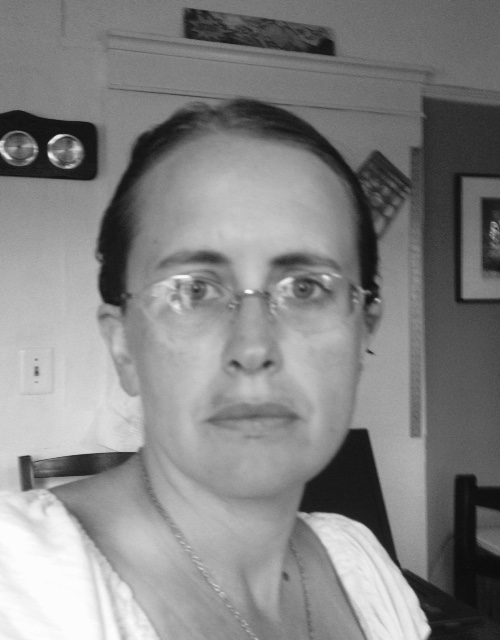
This is me today:

FullSizeRender(1)

Feat

Some mornings I wake up and everything within me is full of rage. I am humiliated by my life – I am not in command of anything. Every action taken by those around me feels like an affront or an assault.

I don’t have the switch that some people seem to, which says: “This is out of your control.” “Let it go.” “Don’t take everything so personally.”

When one has emotions that are out of proportion to action – which I do pretty much all the time – those rational parts of the brain which respond to normal or even less than normal, but not actually directly harmful actions or behaviours, are not able to help me to see that I am angrier than I should be. That anger makes me feel ashamed of myself because I cannot let it go.

Everything when one is where I am currently feels bad. Everything feels intentional. The smallest slight, which for someone with a healthy brain may only trigger irritation, can throw me into a tailspin that I will obsess about for hours or days.

This is not better than feeling nothing. It is exhausting and embarrassing and eventually leads me back to the relative safety of feeling nothing. Because between the two, choosing the lack of emotion feels less bad.

This inability to regulate emotional response and the recovery it takes to finally let go – by retreating to the meaningless place where none of this matters is not good. This is the cycle of most of my days. Like many people with depression, I feel better as the day moves on. Which is helpful today, when I meet with a psychiatrist for the first time since I was hospitalized this afternoon.

Imagine if most of your days begin this way. This is me today:

FullSizeRender(1)

Fight or Flight

Living with depression is not like living. Moving through the day, finding reason to continue the actions that one intellectually understands are necessary to sustain life, becomes a chore. Being around people who require interaction, trying to make one’s self understood, or likable, or even human-seeming is exhausting. And if, like me, one is already given to isolating and solitary activities, it does not feel bad to retreat even further into those safe places. Except that being alone feels bad. Meaninglessness seems reasonable. Your own inability to function in the world like other people do does not seem a product of shitty brain chemistry, but a fact that becomes easier to accept as the grasp of depression pulls you in.

If you like me are fortunate to have people in your life who want to try and keep you out of the hole that depression makes so comforting you may also understand how frustrating it is to know you are irrational, but feel powerless to do anything about your own behaviour. Feeling that you no longer understand how you got all these loving people in your life in the first place is one of the scary realities of being depressed. For me, in the past few months, it has also been a major factor in my seeking mental health expertise.

I titled this post “Fight or Flight” because on Thursday, July 9th at 3:48pm I was admitted to a hospital, against my will, because the help I sought for depression took an unexpected turn. That’s mild, really. I spoke with a crisis worker who was both young and perhaps inexperienced and felt that my symptoms required “more intensive therapy than [our] program can offer.” Which meant being admitted to a psych ward for evaluation by a psychiatrist. This was not explicitly stated until I was already being transported to a hospital, where I had already stated I did NOT want to go. All of my possessions were taken from me. I was held for four hours before any sort of medical professional spoke with me. Long story short (and I intend to discuss details later, but not in this post), I was held for twelve hours, given ultimatums concerning treatment in an in-patient hospital, finally allowed to speak to an actual psychiatrist, and finally released (had to take a cab back to my car, which came out of my pocket) with a promise that I would seek intensive out-patient assistance.

I have never been more afraid than I was in that miserable, locked ward. I have never been angrier than I was to find that my attempts to take care of my mental health, which is not good, led me to a place where I felt not only worse, but punished for seeking assistance. I have never been more humbled than by the realization that this experience happens to people everyday who have limited access to mental health treatment. I am fortunate to not have had this be my first experience with the mental health infrastructure. Nor will it be my last.

I am on a path to fight. Feeling afraid, punished, and feeling my rights to have a voice in my treatment and therapy being infringed upon, pushed me into a place where I felt my only option is to fight. I want to be well. I have no illusions about the unlikelihood that I will ever be “cured”; there is a great deal of who I am depression has shaped and because of that I do not expected to live without depression. I do, however, want to get to a place where I can stay ahead of depression. I want to be able to care for myself again.

During the next two months I will be part of an out-patient program that will hopefully help me gain tools to better navigate the mental health system. On my own, I will be reading and reflecting on a bunch of writings about depression, my own experiences, and the recent trauma caused by the experience I just described. I want to put into the world what this felt like to me. Perhaps someone reading this will relate, or have insight.

This is me today:

FullSizeRender

I am trying to find my way back to wanting to engage in my life. Many of you may be able to relate to that. Many may not. Either way, it is important that we talk about this experience. It is important for me. Thanks.

Remembrance

From 2004 until mid-2007, I walked to work almost daily from my house on SE 38th and Hawthorne to the Portland State University campus. Crossing the Hawthorne Bridge from the east heading into downtown, I felt deep gratitude to live in a place with such beautiful ways to view the river and city. Always alive with activity – cyclists buzzing by, people running or fishing from the esplanade below the bridge, dragon boats skimming along the river – Portland was vibrant even when my own life lacked brightness. I loved that walk, even in the rain and oppressive heat, and I loved the things I could count on seeing everyday.

Returning from work in the evenings, just at the top of the on-ramp, I would take pleasure in one fixture of the bridge, particularly in the month of December. The Man in the Mickey cap, with the white suit, waving to the cars and playing music was a little spot of light for me in times when I could not make my own light. I came to count on seeing him, particularly during the months when the sun set before I left work. He was something like joy for me, in his apparent happiness, sharing his perfect gift with walking, riding and driving commuters just at the point in their day when they, like me, most needed him. He did not make eye contact, no words were exchanged, but he always made me smile and I thanked him with my heart.

I found out just recently that he died in 2012 and that his death was a suicide. I have been thinking about him for several days and trying to put together words to express what he meant to me and what I would do differently if I had had some foresight back when I was just another commuter whose day was brightened by his trumpet music and magical presence. Would I have slipped him a note to thank him? Would I have learned his name and listened to his story, if he had been willing to share? Would I have given him the space in my life to be more than a particularly pleasant part of my daily routine? Perhaps.

What I understand best about hindsight is that it exists to try and make us feel we can be better, treat others and ourselves better. We reflect and recall in order to believe that we have learned from our past failings or oversights. It is a perfect tool that, if used correctly, can help us make better decisions. But it is also entirely subjective and only truly useful if we will it to be so. And hindsight has healing power for each of us individually and can, perhaps secondarily, impact those who were part of the original experience. But there can be an impact and belief in that is essential.

Magical Man in the Mickey Hat, I wish I had told you how much I appreciated your presence. I wish I had known that you, like me, felt the weight of depression. I wish I had the ability to do for you what I am only beginning to learn how to do for myself. Perhaps it would have made a difference. Hope allows me to think so and one thing I know, without any doubt, is that holding onto hope is the bravest thing, sometimes the only thing, we can do in this life.

It’s Christmas night and I am one who does not feel well at the holidays. For those of you who understand this, I just want to say how necessary it is that you know you are not alone. Find that tiny place of light, you know it exists even if buried deep, and cup your hands around it to feel its perceptible warmth. Hope lives there. And you can fan its little flame.

Deadline

Sometimes it is necessary to set a deadline in life. We spend a good deal of time anticipating “the moment” when we will be ready for something to happen: new work, new space to live, children, love. We expect, perhaps foolishly, that when that arbitrary time arrives we will be ready. For example, when I was in my early twenties, I thought that by the time I was in my late twenties I would be ready to have children. Never mind that my romantic relationships had been less than healthy, or that I was still quite clueless about what I wanted to do for work, I felt that twenty-six seemed like a perfect age to become a mother. Fortunately for me and my maybe baby, nothing lined up to make that a reality.  I was ending a damaging relationship that had dragged on several years too long, beginning graduate school, and moving to a new city. More than that, I was starting to change the way I viewed my life and I was reasonably happy with those changes. The happiness factor, turns out, was the essential part of transforming the right time into the not quite yet time.

It has been more than ten years since I was that young woman and I realize I could stand to take a lesson from her. She called off an engagement because her gut told her it was the right thing to do. She applied to a graduate program at a school she had always longed to attend because her gut told her it was the right thing to do. She moved to a city she had loved from the first moment she visited because…well, you see where this is going. In the space of one year, she transformed her life, which had not been a happy one for some time, into doing and being something she felt proud of and safe within. She took a risk that her body did not reject and that her mind and heart responded to with joy and excitement. She was smart back then and I am proud of her now.

When I made the decision to move from Maine to New Jersey it was the hardest decision I have made since I was twenty-six. No joke. I have moved cross-country in the intervening years, been diagnosed with depression and attended therapy, left all of my closest friends on the west coast, been alone in a life I never expected to have in Maine, but the several months leading up to moving from Maine to New Jersey were harder than any of that. What made this decision so hard was that I tried to let my heart lead and chose to pay less attention to my gut. Sometimes what our guts say feels like fear and does not feel particularly trust-worthy. Sometimes we want to believe that we’ve had so much to fear, been hurt so many times, that our gut is just reacting to all that baggage. I think that may be a mistake; guts care less about our history than we think. And hearts are hopeful in ways both endearing and dangerous. Sometimes we end up with our guts in a knot because of all the acrobatics they have been doing trying to get us to listen. This is problematic for anyone, but coupled with depression brain, it can be downright sickening.

I am making a promise to my twenty-six year old self and to my gut. I am setting a deadline. You are going to hear about this probably more than you’d like in the next two months, because aside from the friends I talk to on the phone and through social media, you are what I’ve got for a daily companion. Which is perhaps better than nothing. I am trying to see the good in being here. I am trying to remember what it is that made me think moving here would be something I could feel good about. I am trying to find a way to be proud of myself again. I am trying.

Clearing

I have always enjoyed long drives. The meandering escape of driving on a road I do not know through a landscape I have not explored allows me access to my mind in a manner similar to hiking, though generally does not require as much exertion. Since moving to New Jersey I have found myself spending several hours a week in my car, just driving for the change it offers. I do not know any of the roads here, where I will be led is a mystery. This helps me to focus on something outside of my thoughts, which can be far less focused.

The mind of a depressed person can often feel clouded and thoughts come through in fragments, if at all. I find myself locked in emotional loops, playing over the same sadnesses and losses, disconnected from active thinking, because these loops are more visceral and act upon me in anguishing ways, not at all constructive or useful. Driving with a mind full of cotton balls helps sometimes to uncover thoughts that are helpful, and it does wonders to slow down the tears.

I took my Forrester into a state forest preserve and drove for a few miles on rain-drenched, sandy roads, heavily scarred by ATV and tire tracks larger than mine. Keeping one’s car in the tracks is slippery business and requires a good deal of letting go. One must ignore the thoughts that want to be considered and just hold the wheel steady heading through particularly deep puddles or over suspicious looking lumps in the center of the road. One cannot allow song lyrics or cell phone alerts to divert attention away from the always looming possibility of driving off the track and into a felled tree, or into the path of a fleeing deer, tail up in full alert. There is a freedom which comes from this sort of reckless focus, which I am thankful to find, when I cannot breathe and breakthrough my sorrow to discover some useful idea that may lead me away from making more reckless  decisions.

Sights and Smells

Denuded

Chimamanda Ngozi Adichie begins Americanah with the following line:

Princeton, in the summer, smelled of nothing, and although Ifemelu liked the tranquil greenness of the many trees, the clean streets and stately homes, the delicately overpriced shops, and the quiet, abiding air of earned grace, it was this, the lack of a smell, that most appealed to her, perhaps because the other American cities she knew well had all smelled distinctly. (Americanah, page 3)

I’ve only just begun this novel, the second that I have read from Adichie, and now several chapters in, it is this line that sticks with me. The smells of places become part of the identity formed in our memory. I remember my childhood as the working waterfront smell – fishing boats and low tide with undertones of fried food. My maternal grandmother as Ciara perfume and my Poppi as apple pipe tobacco. The air in both Tacoma and in Portland, Oregon was damp and often heavy to breathe with rich, plant smells. My home in Portland smelled of Chandrika soap and compost.

I have found myself revisiting these truths of memory and finding they are equally present for seasonal changes. My awareness of this awakened when I moved back to Maine in 2010, where each season has a distinctive aroma, particularly if one lives somewhere rural. I returned to Maine in April of that year, which is widely known as “mud season.” The long awaited thaw has (hopefully) begun, trees take on a fuzziness, not quite budding yet, snow relinquishes control of the  Earth, causing flooding and, as the name implies, treacherous, calamitous, mud. That oozing dirt has a life and odor of its own, and it is in this chaos, which will yield to crocuses and ferns, that Spring finds its nose.

I was itching to dig in the dirt, having just returned from years of living without a garden of my own, and I found this smell intoxicating and was baffled by this. How could I not have known that this is the smell of Spring? The answer I came to embrace is that Oregon and Washington have this smell nearly year round. The Northwest is in an almost perpetual state of decay and rebirth; there is hardly a freeze from which to revive.

And so it was – Summer is goldenrod and honeysuckle, Autumn rotting leaves and burning leaves and Winter wood stoves and air cold enough to have no smell whatsoever.  Note: people in all seasons have their own odors and in Maine these are not unlike the seasonal smells, particularly in rural places.

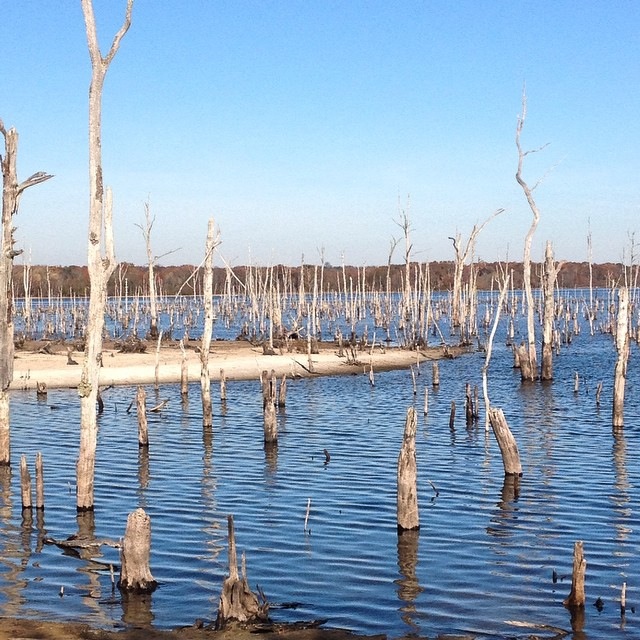
I have been thinking about this a good deal since beginning Americanah and realized today, while walking around a reservoir about half an hour from my new home, that part of my feelings of disorientation here have to do with how confusing New Jersey smells.

The loop around the reservoir is about four miles, mostly loose gravel trails, with an occasional foot bridge. There are remnants of the forest which preexisted the reservoir, Great Grey Herons and several varieties of duck make their homes. People fish and ride trail bikes. The trails are, for the most part, separated from the roads running all around the parameter by trees which in Summer probably do lend some weight to an illusion of wildness. But the smells are telling.

In the two hours we walked, I was struck that the leaves have not rotted enough to have a detectable smell, the air while dry and cool, does not carry hints of any late blooming plants, and even the water was mostly without odor. I was also aware that I was really trying to smell something natural in this place which, unlike most of the places I have been since moving here, is attempting to be something other than a suburban wild space. And perhaps this space is convincing for some; I know I have been ruined by Maine.

More confusing to my senses were the various smells coming from fellow walkers, runners and bikers. One expects to smell sweat and the occasional overly concerned perfume or cologne wearing exerciser, those are found everywhere. Instead, I was hit with Febreze like smells and detergent, smells far too sanitized to reveal that inside of them were human bodies. Feeling the sweat drying coldly under my own arms, the vague fragrance of my shampoo released as my hair grew damp with perspiration, I felt suddenly foreign. I do not like to “smell of nothing,” I never have. Moreover, I like people to smell like people. Or, at the very least, I like people to smell like what they eat, their work, or their homes. And it is this last thought which struck me. The striving for impossibly clean – not work, not food, not sweat, not dirtiness -smell may be what I find difficult. I have lived always in another kind of place, where people are less concerned, where cars are not all new, where there is no right outfit to workout in, where bodies smell like bodies and rot like rot. I know that much of America is not like this reality I have lived. Or, at least, I am beginning to know. It is strange to be thirty-seven and to feel that there is this other America that I have not lived. Much is familiar, but just as much is so very strange. I can walk here and sit by this reservoir and recognize the signs of life I enjoy – the trees, the changing and falling leaves, bird songs and the mad dash of squirrels and chipmunks – I can do this but I will still smell the difference and it will not feel correct. For now, I long for the sure signs of Autumn that Maine reveals so effortlessly. For now, I will search them out and hope for them in whatever small and perfect ways they may exist. I know I will find something I recognize, even in fleeting moments, if not, in my recent and still potent memories.
Naming

“Is that your mom?” J, the friendliest of The Girl’s new school pals whispers to her while I stand two feet away, waiting for one of the classroom assistants to usher their giggling, jumping, push and shove 2nd grade line into the building. I pretend not to hear, picking dog hair from my sweatshirt.
“No! That’s Sarah. She’s just my dad’s girlfriend.”
It’s the just I want to talk about.
I grew up with my parents. Both of them. Together. This was rare among my friends, though not as rare as it might be today. I was about The Girl’s age, which is seven, when I realized my best friend’s parents, who had three kids together, were not married. I remember how baffling that was for me. How could they have children, be called “Mom and Dad” if they were not married? I grew up Catholic with rather traditional ideas about family and this realization – that marriage wasn’t what created children, but something more mysterious – opened up the world to me in interesting and important ways.
I think it was the beginning of a greater realization for me that names and naming are important. We differentiate our friends and best friends, acquaintances, great and great-great grandparents, cousins, brothers and sisters, half-brothers and step-sisters – we use these terms because they hold a place for a particular person in the larger narrative of our lives. Sometimes names bring us better understanding of those relationships; sometimes naming makes it easier to understand relationships that are not easy to join to the already seemingly complete story of our families. I think this is particularly true for children, which is why I cut The Girl and myself at seven some slack for being limited to just naming.
My own process of understanding larger concepts of family and friendship became more complicated when I was a young adult. I attended college in the Northwest and stayed in that area of the country through my early thirties. My entire family is in the Northeast. I spent holidays with friends, I have nieces and nephews who are not my blood kin, I have at least one young woman in my life who considers me her second Mama. Love is the building of long lasting relationships with people outside of the traditional family and love is complicated. Even my relationships with my siblings has travelled a path of transition; I know my sister in ways that are far more rich and meaningful than the label “sister” implied when we were young. The richness and reward of complicated relationship understanding is the point of maturity, I think. But hearing that just from The Girl still stung.
When I first moved to New Jersey, maybe the first weekend I was here, we took the kids to the beach. The water was, well into October, still warmer than the bays of Maine ever get in the summer. The Boy and his father were triumphantly battling their way through the waves, while The Girl and I hung back on shore. The power of the water here surprised me. A strong swimmer and life long lover of all things Oceanic, I wanted to feel courageous in the face of an undertow that continually knocked me on my ass. I wanted to swim out past the breakers, but I was also aware that The Girl was feeling apprehensive about the water. She, like me, has never lived in New Jersey. She, like me, was born in Maine. These crashing waves, deceptively powerful and sometimes taller than they seem, were making two otherwise brave Mainer girls move with caution. We were finding ways to amuse ourselves, playing chicken with the waves as they broke, burying our feet in the wet sand, laughing and chasing each other along the shore. At one point, she turned to me, wrapped her arms around my waist and with joy nearing ecstasy cried: “I love you!” It took my breath. It takes my breath now in recollection.
We are at a beginning, trying to sort through what we know in each of our lives. I have been loved before, but not like this. I have had many names, with or without a just to differentiate them from another. So perhaps the sting I felt initially is just a piece of this new love and not a limitation.

10712712_10152280094271594_6101548525185144483_n

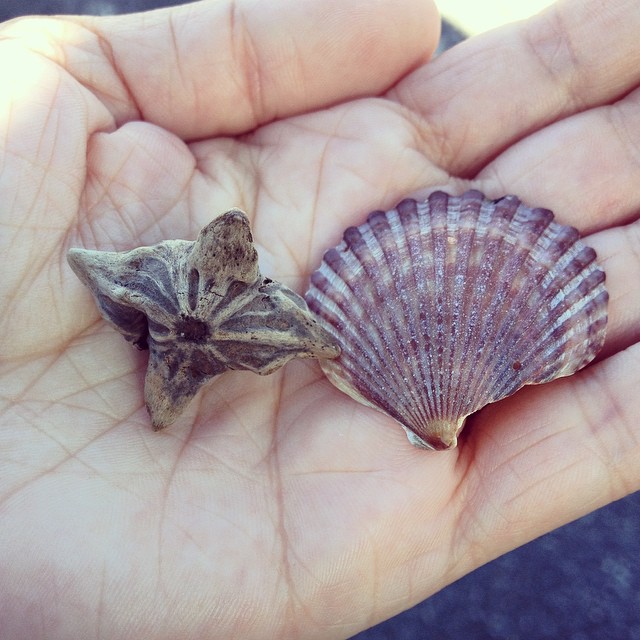
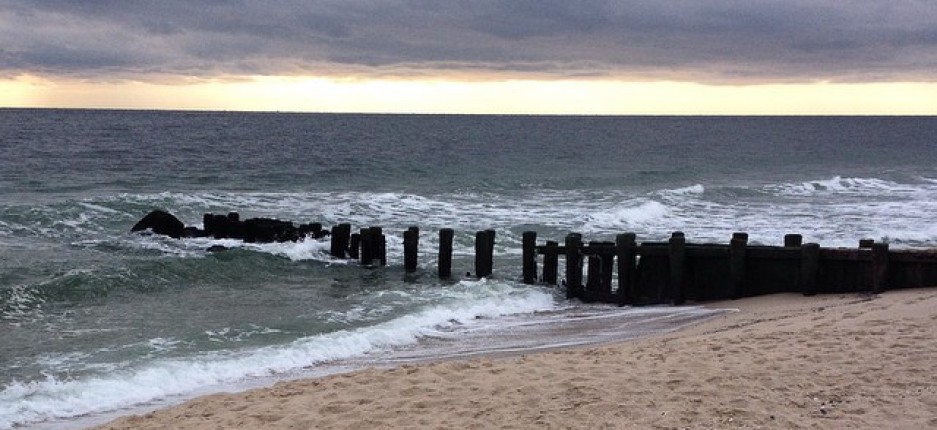
Most days I spend an hour walking my dogs on the beach that is less than a mile from the apartment I have shared with my partner and his children for the last month and ten days. I fill my pockets with scallop shells and fish bones, sea glass and drift wood, pottery shards and the occasional sand dollar. I drift along the sand sometimes present, the ease or difficulty of movement registering with greater weight on the days my thoughts are thick and harder to hold back from erupting as tears or anguished utterance. When I am not burdened in this way, I notice the sea, the colors of which – greens, blues and some grey a shade I would call smoke – are unlike the sea I know – obsidian and moss and cobalt – the more northern Atlantic bays of my youth and last four years. These colors surprise me and are pleasant, though they do not move me to wonder what lies beneath that way I have always done anywhere along the unforgiving, ancient fingers of Maine’s coastline.

Nothing is strange to me and yet nothing is known. The comfort in this life is that I can walk the beach everyday and look into the sand when I cannot face the sea. I can search for small perfections that were formally the main protection for bivalves, who, while not helpless, were more limited in their means of survival than I. And perhaps it is their simplicity that I admire most. The shells I find are either intact or not and there is but one choice; I am only interested in their wholeness. At present I have twenty complete shells, ranging in size from less than a quarter inch to just over two inches and from a pale salmon color to coal. I like the reds and blacks the most. I appreciate that they fan and layer in a predicable manner, their delicacy, and that, among the varieties of shells which wash up in the tides here in New Jersey, they are somewhat rare. I like that it requires focus to see them and to determine whether they are whole before I wipe away the sand and place them gently in my pocket. I like that some days there are no whole shells, just ridges and deceivers with hair thin splits or holes drilled by predators. I like that some days, there are no scallop shells and I go home with salt brine on my glasses, tired dogs and empty pockets.

There have been many transitions in my life, each difficult in its own way, requiring me to understand myself in new and often painful ways. As I grow older, change is harder to face because what must change has become more solidly a part of who I know myself to be. Three times, I have found myself beach walking and collecting. This pattern did not occur to me until I moved here to become something I have never been – a partner and part of a family. This is also the first place I have lived not by choice, but because I cannot choose to live without the love that has brought me here. This is harder than anything I have ever done and I want to write it out because I want to remember I have done something this hard.

This is a personal voyage, but my insights may invite discussion. I am hopeful that this will happen.