“Is that your mom?” J, the friendliest of The Girl’s new school pals whispers to her while I stand two feet away, waiting for one of the classroom assistants to usher their giggling, jumping, push and shove 2nd grade line into the building. I pretend not to hear, picking dog hair from my sweatshirt.
“No! That’s Sarah. She’s just my dad’s girlfriend.”
It’s the just I want to talk about.
I grew up with my parents. Both of them. Together. This was rare among my friends, though not as rare as it might be today. I was about The Girl’s age, which is seven, when I realized my best friend’s parents, who had three kids together, were not married. I remember how baffling that was for me. How could they have children, be called “Mom and Dad” if they were not married? I grew up Catholic with rather traditional ideas about family and this realization – that marriage wasn’t what created children, but something more mysterious – opened up the world to me in interesting and important ways.
I think it was the beginning of a greater realization for me that names and naming are important. We differentiate our friends and best friends, acquaintances, great and great-great grandparents, cousins, brothers and sisters, half-brothers and step-sisters – we use these terms because they hold a place for a particular person in the larger narrative of our lives. Sometimes names bring us better understanding of those relationships; sometimes naming makes it easier to understand relationships that are not easy to join to the already seemingly complete story of our families. I think this is particularly true for children, which is why I cut The Girl and myself at seven some slack for being limited to just naming.
My own process of understanding larger concepts of family and friendship became more complicated when I was a young adult. I attended college in the Northwest and stayed in that area of the country through my early thirties. My entire family is in the Northeast. I spent holidays with friends, I have nieces and nephews who are not my blood kin, I have at least one young woman in my life who considers me her second Mama. Love is the building of long lasting relationships with people outside of the traditional family and love is complicated. Even my relationships with my siblings has travelled a path of transition; I know my sister in ways that are far more rich and meaningful than the label “sister” implied when we were young. The richness and reward of complicated relationship understanding is the point of maturity, I think. But hearing that just from The Girl still stung.
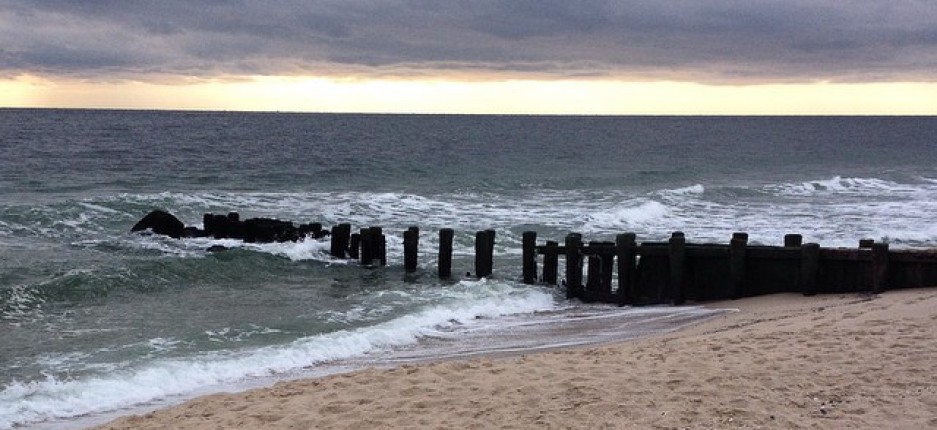
When I first moved to New Jersey, maybe the first weekend I was here, we took the kids to the beach. The water was, well into October, still warmer than the bays of Maine ever get in the summer. The Boy and his father were triumphantly battling their way through the waves, while The Girl and I hung back on shore. The power of the water here surprised me. A strong swimmer and life long lover of all things Oceanic, I wanted to feel courageous in the face of an undertow that continually knocked me on my ass. I wanted to swim out past the breakers, but I was also aware that The Girl was feeling apprehensive about the water. She, like me, has never lived in New Jersey. She, like me, was born in Maine. These crashing waves, deceptively powerful and sometimes taller than they seem, were making two otherwise brave Mainer girls move with caution. We were finding ways to amuse ourselves, playing chicken with the waves as they broke, burying our feet in the wet sand, laughing and chasing each other along the shore. At one point, she turned to me, wrapped her arms around my waist and with joy nearing ecstasy cried: “I love you!” It took my breath. It takes my breath now in recollection.
We are at a beginning, trying to sort through what we know in each of our lives. I have been loved before, but not like this. I have had many names, with or without a just to differentiate them from another. So perhaps the sting I felt initially is just a piece of this new love and not a limitation.
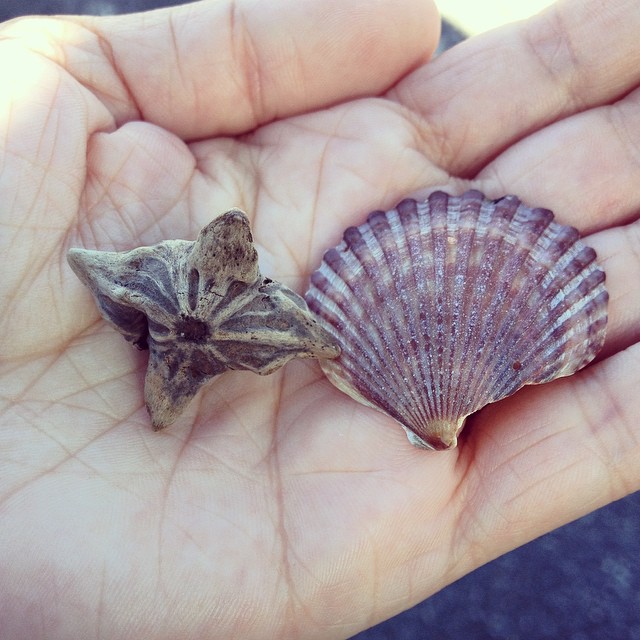
 beachwalkshellshock